
Wish you could showcase more than one image for your WordPress posts? That single featured image just isn’t cutting it, especially when you’ve got multiple eye-catching visuals that deserve the spotlight.
But by default, WordPress only lets you highlight one image per post. This means that your best photos or product shots often get buried further down the page.
We know this is frustrating for bloggers, portfolio owners, and eCommerce sites alike.
But here’s the good news: with the right tools, you can easily add multiple featured images and instantly make your posts more engaging and click-worthy.
In this tutorial, we’ll show you the easiest ways to add extra featured images to your WordPress posts – no coding required. 🙌
Why Add Multiple Featured Images in WordPress?
The answer is simple: Because one image isn’t always enough.
Adding multiple featured images lets you showcase more visuals across different sections of your site, like your homepage, blog archive, or category pages. All without repeating the same image or hiding great content deeper in the post.
Now, featured images are a default WordPress feature, and you’ll find them in every WordPress theme. They help bring life to your content and make your blog posts more engaging. Plus, they help capture users’ attention and make them click on your article.
But there are situations where you might need to add multiple post thumbnails to your WordPress website.
Maybe a client has a special requirement to use more than one thumbnail, or your website design requires various images.
For example, sections like the homepage or archive pages (the blog and category section) require different image sizes. In this case, having an option to display multiple thumbnails is really useful.
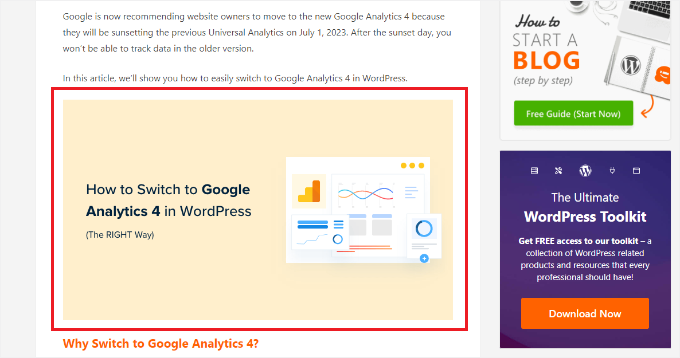
On WPBeginner, we use multiple featured images for archive pages, social media, and thumbnails that appear in a blog post.
Here’s a thumbnail that appears within the blog post:
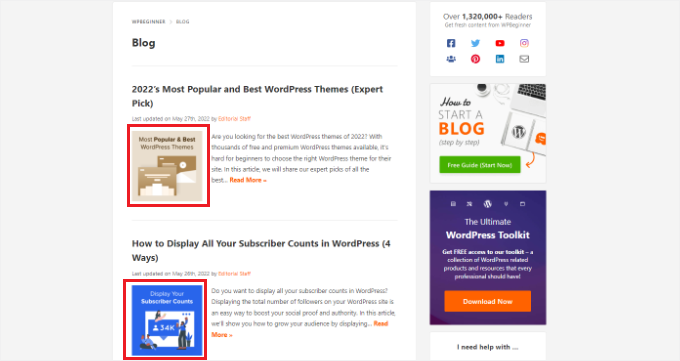
On the other hand, the images that appear on archive pages are different.
Here’s a look at how thumbnails appear in the blog section on WPBeginner:
Now, we’ll show you how to add multiple thumbnail images in WordPress, as well as a bonus tip. Here’s a quick overview of the topics we will discuss in this guide:
Ready? Let’s get started.
Adding Multiple Featured Images in WordPress (Without a Plugin)
Most WordPress themes only allow one official ‘featured image’ at the top of the post. However, the simplest way to display additional visuals is by adding them directly inside your content using the WordPress block editor.
First, you can upload your primary thumbnail using the default featured image option in the content editor.
Simply click the gear icon at the top to open the settings panel on the right and then go to the ‘Featured image’ section.
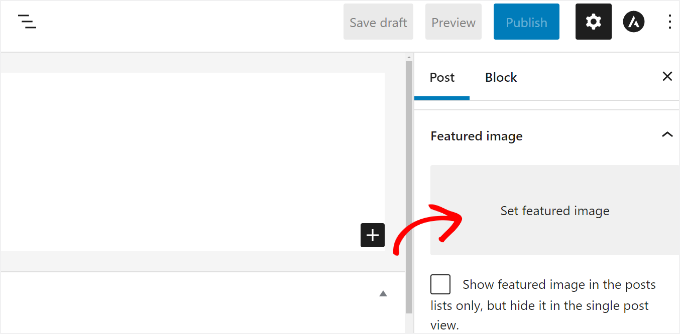
After that, you can click the ‘Set featured image’ area, and the WordPress media uploader will pop up.
Go ahead and upload your picture or select an image from your existing media library.
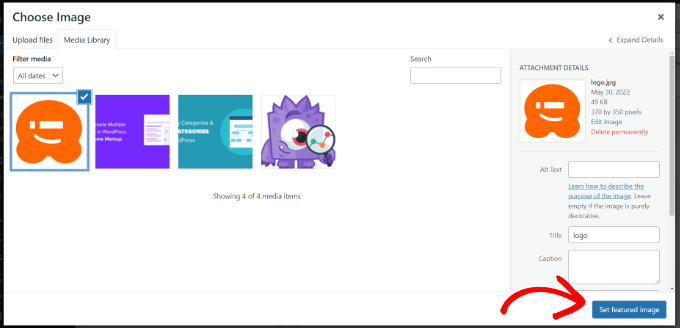
After selecting an image, simply click the ‘Set featured image’ button.
The next step is to add an Image block anywhere in the content where you want your second image to appear.
Simply click the ‘+’ button and select the ‘Image’ block where you want to display the extra visual.
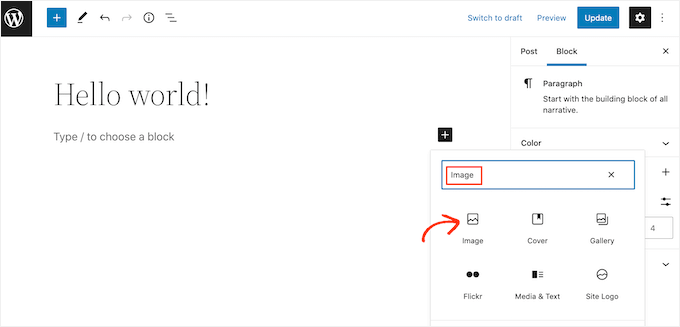
🧑💻 Pro Tip: You can also use the Cover block instead of the Image block. This allows you to add text over the image and make it look like a secondary header within your article.
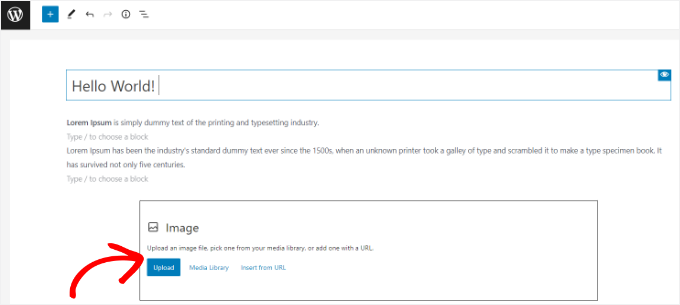
Once the image block is added, simply upload the thumbnail to your blog post.
Alternatively, you can select an existing image from your WordPress website’s media library or use the ‘Insert from URL’ option.
With that done, you can click ‘Update’ or ‘Publish’ to make it live.
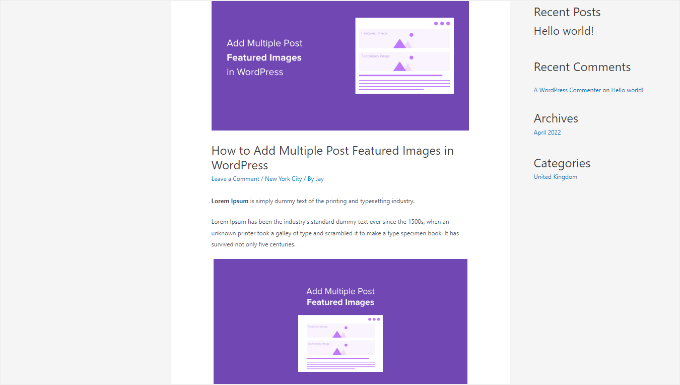
You can then visit your WordPress website to see multiple featured images.
📝 Alternative: With WordPress, you can even use the gallery block and show multiple featured images. This is especially useful if you have an online store or need to show numerous high-quality product images.
If you’re looking for a more advanced option, we recommend the Envira Gallery plugin. It lets you display a responsive image gallery with lightbox effects, add watermarks to protect your content, and include social sharing buttons to boost engagement.
For more details, please see our guide on how to create an image gallery in WordPress.
Bonus Tip: Assigning Featured Images for Different Categories
If you want to show a different featured image for articles in a particular category, then the best solution is to use the Category Featured Image plugin.
First, you need to install and activate the Category Featured Image plugin.
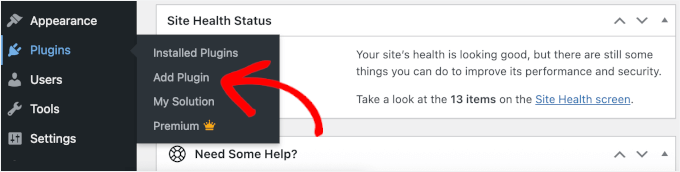
In your WordPress admin area, go to Plugins » Add Plugin.
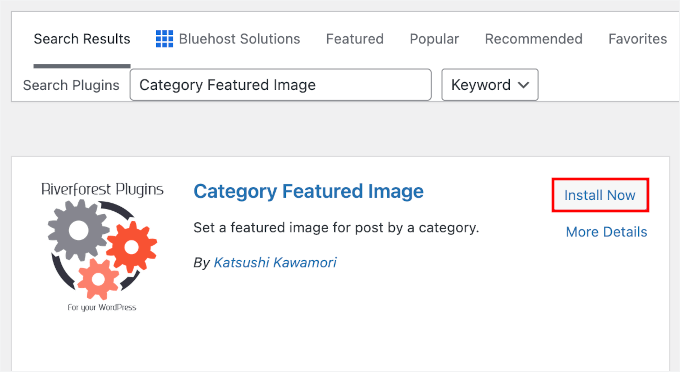
Then, type ‘Category Featured Image’ into the search bar.
Look for the plugin by that name, then click ‘Install Now’ and ‘Activate.’
For more details, see our step-by-step guide on how to install a WordPress plugin.
Upon activation, head over to Posts » Categories. You will now see a new ‘Featured image’ option when adding new categories or subcategories.
Simply click the ‘Add new image’ button to get started.
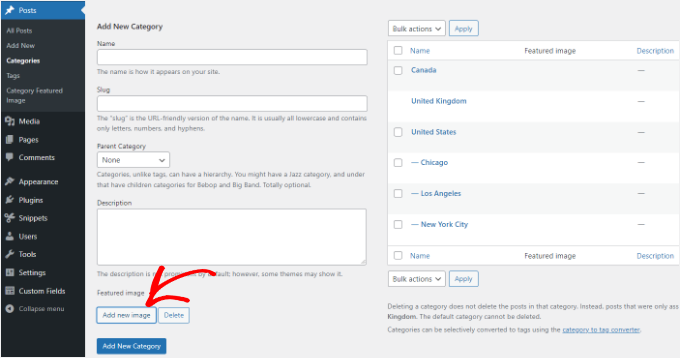
Once you click the button, the WordPress media uploader will pop up.
You can upload your image from your computer’s local drive or select one from your WordPress media library. After that, simply click the ‘Set featured image’ button.
You can also edit existing categories on your website and add a featured image.
To do this, first hover over any current category and click the ‘Edit’ option.
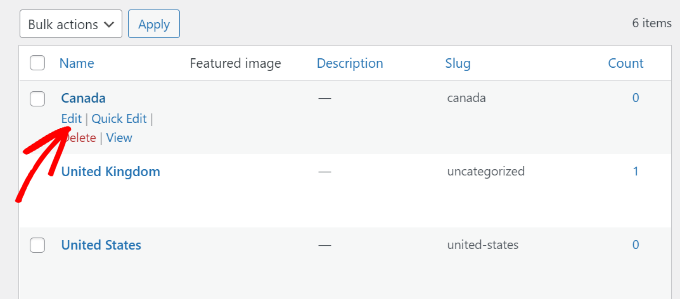
After that, scroll down to the ‘Featured image’ section.
Go ahead and click the ‘Add new image’ button and upload your featured image for the category.
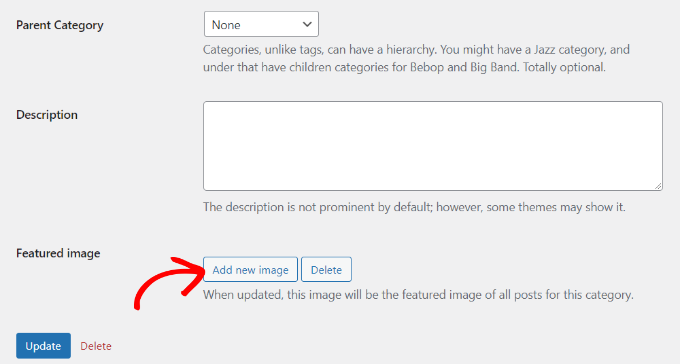
Don’t forget to click the ‘Update’ button when you’re done.
And that’s it!
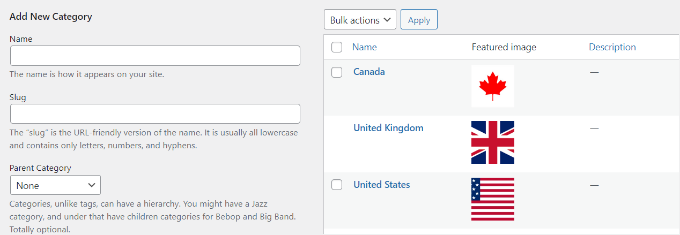
You can now go back to the ‘Categories’ page in your WordPress admin panel and see the featured image for each category.
Frequently Asked Questions About Multiple Featured Images
Here are some common questions we get asked about using more than one featured image in WordPress.
How do I add a post thumbnail in WordPress?
To add a featured image (also called a post thumbnail), simply open the post or page editor.
On the right-hand side, look for the ‘Featured Image’ panel, click ‘Set featured image,’ and upload or select an image from your Media Library. Then click Set featured image again to confirm.
How do I auto-set the featured image in WordPress?
The easiest way is to use a plugin like Default Featured Image. It adds a simple option to your Media settings where you can upload a fallback image. WordPress will then use that image automatically for any post or page that doesn’t have a featured image set.
Want to make sure your posts look great on social media, too? We recommend All in One SEO (AIOSEO).
It allows you to set a default fallback image specifically for platforms like Facebook and X (Twitter). This ensures your shared links always have a picture, even if the post itself is missing a featured image.
Can I bulk edit featured images in WordPress?
Yes, and the easiest way to bulk edit featured images in WordPress is by using a plugin like Quick Featured Images.
All you have to do is install the plugin, choose your filters (like category or post type), and select the new image you want to apply. Do note that Bulk actions are not reversible, so please create a complete backup of your site before clicking the update button.
Will adding many images slow down my website?
Yes, loading multiple high-resolution images can slow down your website. To prevent this, you should always optimize your images.
We recommend using an image compression plugin, which automatically shrinks the file size of your images as you upload them, keeping your site fast.
Additionally, WordPress uses ‘lazy loading’ by default. This feature further improves performance by only loading images as the user scrolls down to them.
More Tips and Tricks for Using Images in WordPress
We hope this article has helped you learn how to add multiple post thumbnails / featured images in WordPress. Next, you might want to see our guides on:
If you liked this article, then please subscribe to our YouTube Channel for WordPress video tutorials. You can also find us on Twitter and Facebook.


